



Presuppositions of Neuro Agility
The foundational principles to understand the construct of Neuro Agility are:
Neuro Agility is a competence you develop:
- All people can be Neuro Agile, but you are not born being neuro-agile. It is a competence you have to develop. As much as an athlete has to practice to become fit and flexible to perform at optimum level, as much you need to develop brain fitness and mental flexibility to have a fast, flexible, and focused mind that can learn, think and solve problems quickly and easily.
Neuro Agility correlates to increased performance:
- Research and case studies confirm that increasing the ease, speed, and flexibility with which you think, learn and process information increases productivity, optimizes mental performance like memory and concentration, improves learning and thinking results, as well as reduces the risk for human error.
Dominance = brain areas and senses that lead:
- Research provide evidence of a strong correlation between dominance and why people learn, think and process information uniquely as well as their potential risk for human error.
- Just like the muscles you use become stronger, so does the brain hemisphere and senses that lead when we process information and learn, become dominant. As people learn and develop, we strengthen neural networks that connect different brain regions and the senses that prefer to lead, making certain hemispheres and senses lead stronger while others follow. As a result, we develop physiological preferences for using some brain hemisphere, brain regions and senses to lead and process information more actively, while the others follow in a more passive manner. These neural networks make it easier to think, learn and solve problems in ways that are consistent in our preferences, hence the reason all people think, learn, and act in different ways.
- Neurological dominance is a natural part of our design. All people have uniquely reinforced neural pathways, which will influence our disposition towards which hemispheres, and senses will lead (dominate) when learning, thinking and processing information.
- The definition of dominance is the brain regions and senses that lead to process information actively, while the other brain regions and senses follow more passively, even if all brain regions and senses are processing information simultaneously.
- Within context of Neuro Agility and NAP™ assessments, dominance does not mean that certain brain regions or senses overpower others, causing only one to work and the other not to work. It also does not mean that one brain hemisphere, eye, ear or hand is stronger than the other. We use all areas of the brain and our senses. Even when we do, one will lead and one will follow.

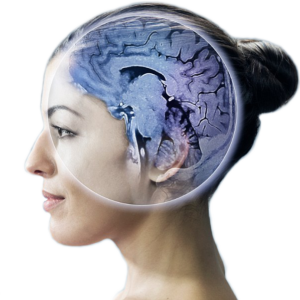
Brain and mind are one functional system:
- Brain = the mass of nerve tissue in the skull. It integrates sensory information and directs motor responses. It is your center for learning and thinking.
- Mind = your mental processes, thoughts, and consciousness. It is the sum total of our thoughts, emotions, behavior, and intelligence.
- The brain is an organ, but the mind isn’t. The brain is the physical place where the mind resides. There is a constant interplay between brain and mind. What happens in the brain will impact the mind and vice versa. The brain and mind are one functional system and can’t be seen as two separate entities.
- The construct of Neuro Agility therefore, incorporates the integrated functioning of the physical brain regions with the mental faculties of the mind.
Potential is an indication of who you can be:
- Your potential is the sum total of the brain-based (neurophysiological) elements you have a predisposition for, that influence how you think, learn, communicate and process information. It is referred to as your Neuro Design. Your Neuro Design is the blueprint for how you are uniquely talented and the predispositions you have.
- We all think, learn and solve problems, but in different ways, based on our unique neurological design.

Related Topics:
Neuro Agility White Paper Infographic
view
What Neuro Agility is NOT
Learn moreNeuro Agility Framework
Learn moreWhy Neuro Agility Matters
Learn moreDifferentiating Factors
Learn morePresuppositions
Learn more
Previous slide
Next slide